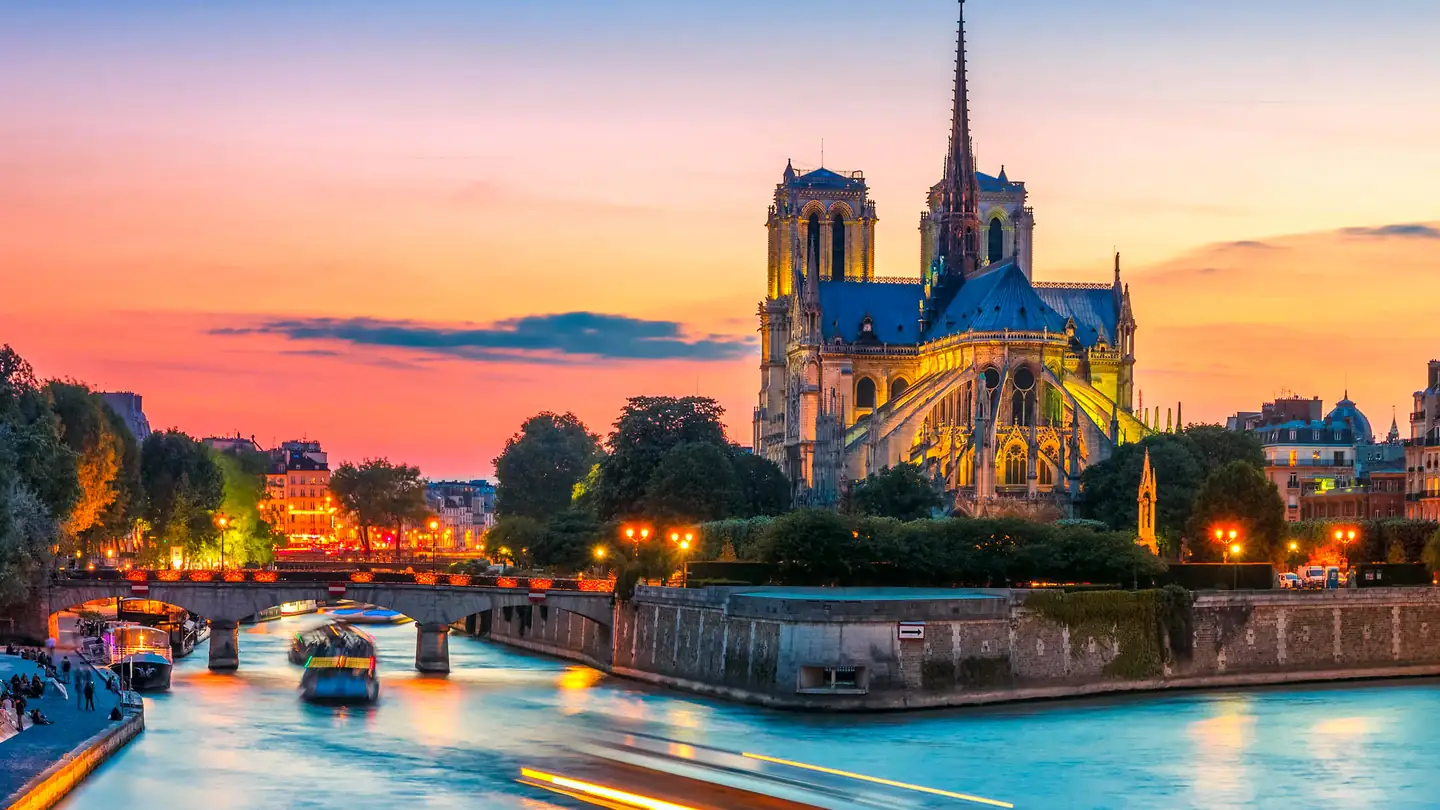
How to visit after the reopening, what to see inside, and the stories behind the stone — plus a self-paced audio tour for the walk itself.
The audio tour
A 30-second sample — the same voice that walks you around the cathedral and across Île de la Cité.
A self-guided audio tour you play on your phone as you walk. An offline GPS map shows where you are, and you start each story yourself when you reach the spot — so you keep your eyes on the facade, the rose windows and the river, not on a screen. Buy once, use offline, keep it for a year.
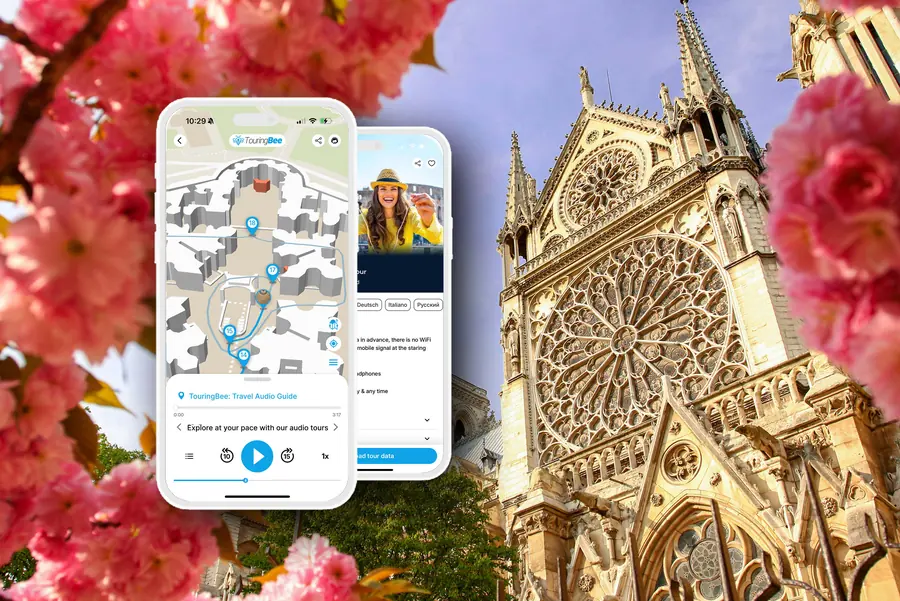
TouringBee audio guide
It covers the cathedral inside and out — the west facade, the portals, the rose windows, the great organ — and then leads you out onto Île de la Cité, past the spot where the fire began and the streets Victor Hugo made famous.
No guide to follow, no fixed start time. Walk in, press play at each stop, and hear the story exactly where it happened.
Why it matters
On 15 April 2019 the world watched the spire fall. Five years later, on 8 December 2024, the doors opened again — stone cleaned to a colour Paris had not seen in a century, a new oak spire on the skyline, and the great organ back in voice. This is the rare monument you can visit at the exact moment it came back from the dead.
Building started in 1163 and ran for nearly two centuries. Kings were crowned steps away, Napoleon crowned himself here, the Revolution smashed its statues, and Victor Hugo's novel dragged it back from ruin. Eight hundred years of French history happened inside these walls.
Notre-Dame de Paris is one of the first buildings to use the flying buttress — the stone "leg" that props the walls from outside so the inside could open up into glass. Look up: the ceiling is 33 metres high, held by ribs of stone thinner than they have any right to be.
The gargoyles that stare over Paris are younger than they look. The Revolutionaries beheaded a row of stone kings, mistaking them for French royalty — and the heads turned up two centuries later under a Paris bank. The best stories here are the ones the official signs skip.
The roof had a nickname: la forêt — the forest. It was built from around 1,300 oak trees, some felled in the 1160s, a lattice of medieval beams held up for 800 years. On 15 April 2019 it burned in a few hours. The spire buckled and fell through the vaulted ceiling on live television.
What did not burn is the real story. The stone rib-vaults mostly held. The three great rose windows survived. Firefighters formed a human chain to carry out the Crown of Thorns and the relics. And on the morning after, high on the facade, the golden rooster that had crowned the spire was found in the rubble — dented, but whole.
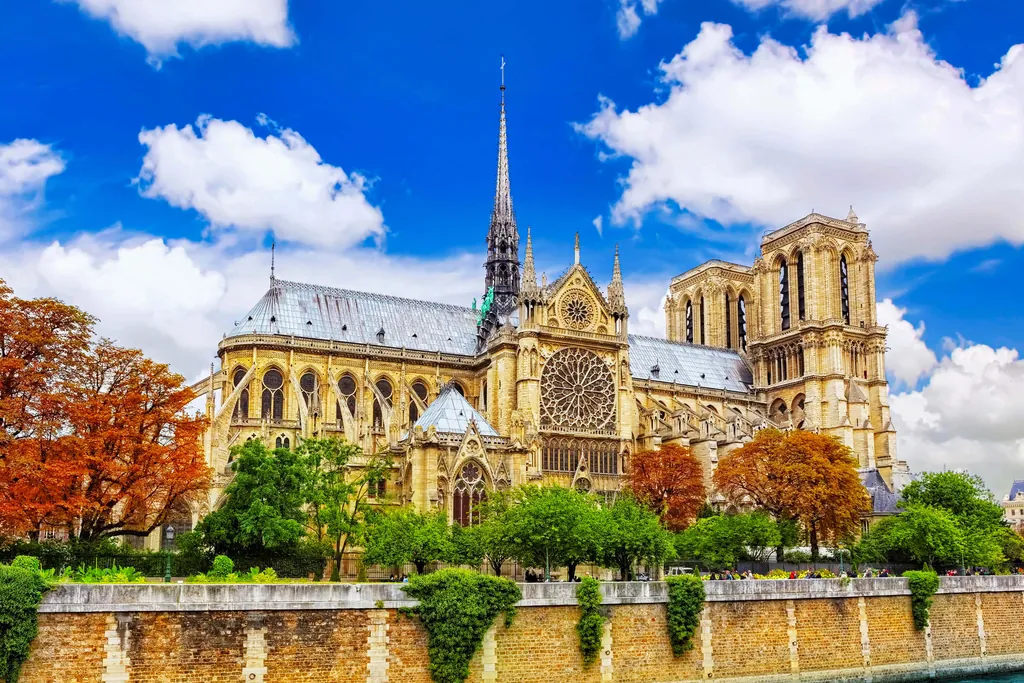
Five years and hundreds of millions of euros later, the cathedral reopened. The rebuilders chose to make it as it was — the same oak "forest," a faithful copy of the 19th-century spire — so what you walk into today is both brand new and 800 years old.
Hear how it burned and how it came back — told where it happened, stop by stop.From €9.99 · offline · in English
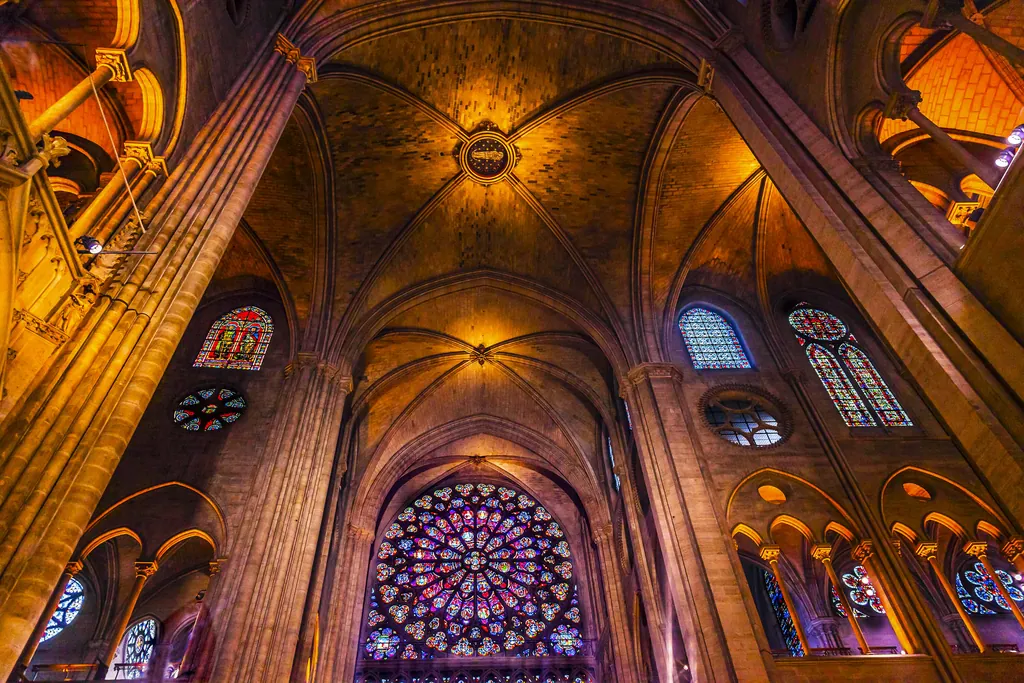
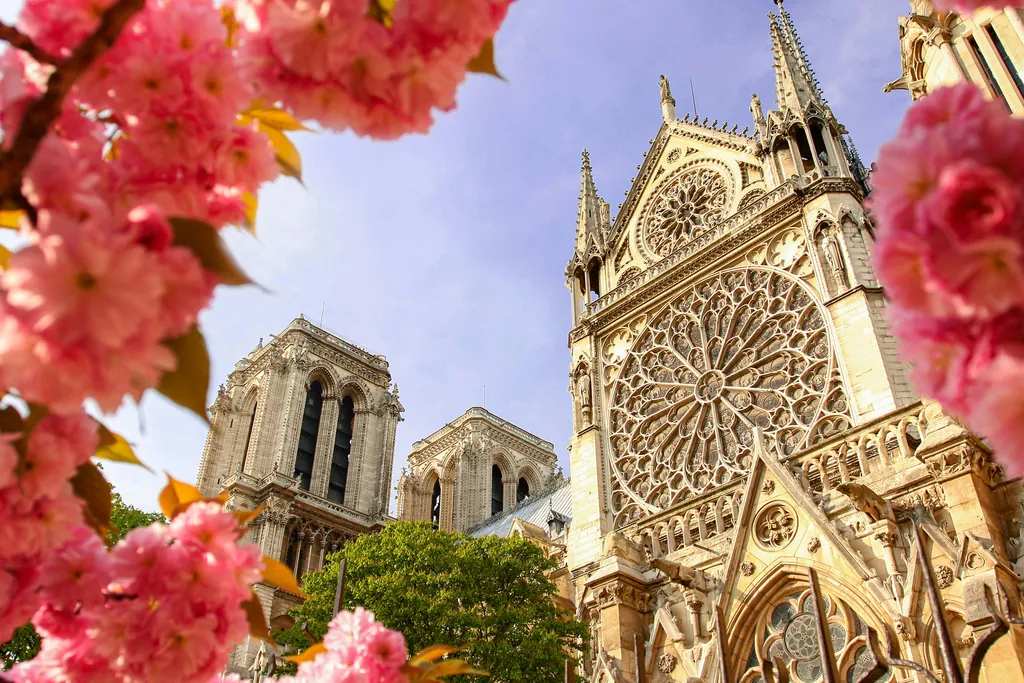
Get the Audio GuideThree round windows, three centuries of weather, wars and one fire — and the medieval glass is still there. The south rose is about 13 metres across. Two Paris metro carriages, parked end to end, would fit inside the circle.
Stand under the north rose on a bright afternoon and the blue seems to come from behind the wall. That blue is 13th-century, made with a recipe we still can't fully reproduce.
The famous horned creatures brooding over the city — the chimères — feel medieval. They aren't. They were added in the 1840s by the architect Viollet-le-Duc, who restored the cathedral and gave it the look most of us picture. They were never meant to scare demons. They were meant to be photographed. It worked.
Across the west front runs the Gallery of Kings — 28 stone figures. During the Revolution a crowd tore them down, certain they were kings of France. They were actually kings of ancient Judah. The heads vanished. In 1977, workers digging under a Paris bank found 21 of them, buried for nearly two hundred years. You can meet those original heads today in the Musée de Cluny, a few minutes' walk away.
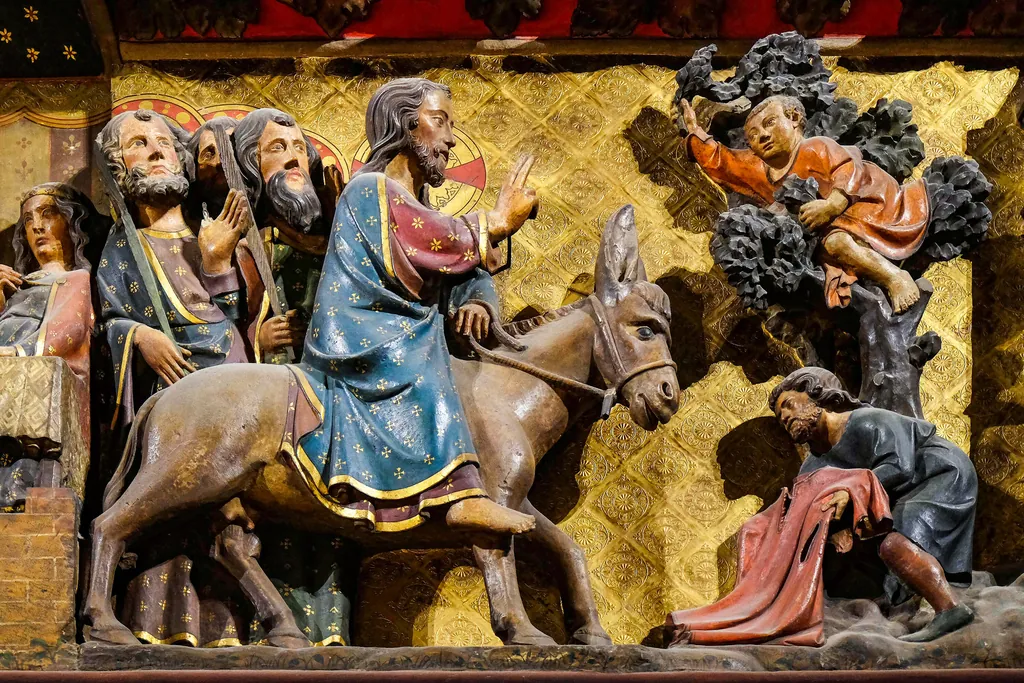
By 1830 Notre-Dame was a wreck — crumbling, half-forgotten, nearly torn down. Then Victor Hugo published The Hunchback of Notre-Dame and made the building itself the hero. Paris fell back in love with it. The restoration that followed is the reason it was still standing to be saved in 2019.
On the tour
A handful of the places and stories waiting at the cathedral — the full route unfolds in the guide as you walk.
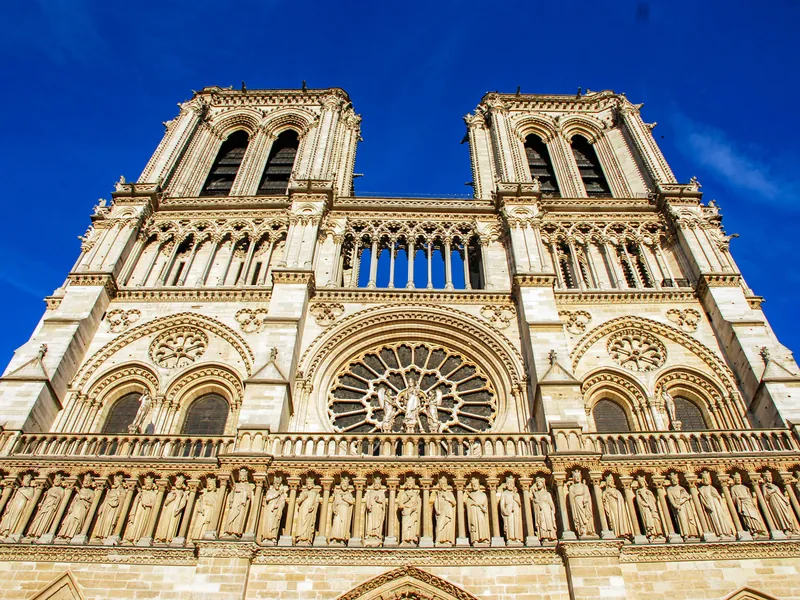
The Gallery of Kings, the portals, and the towers that hold the great bells.
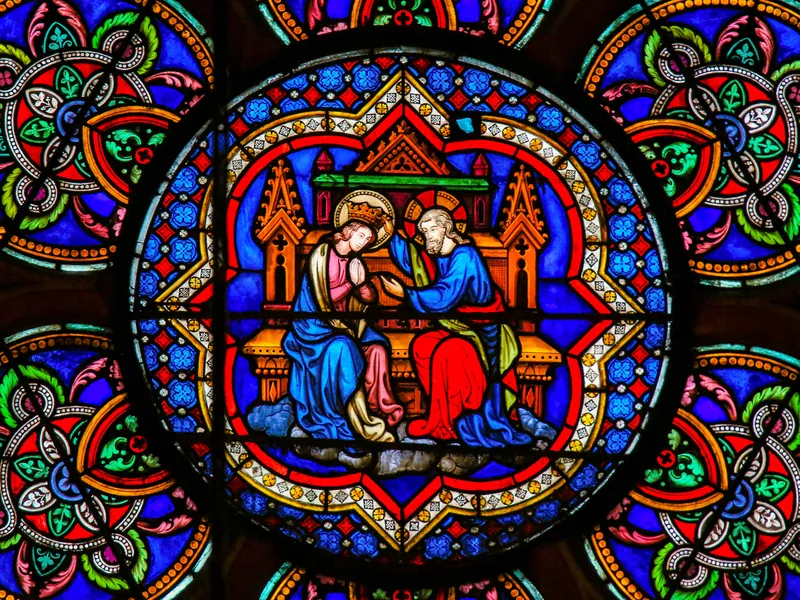
13th-century glass that outlived wars, revolution and the 2019 fire.
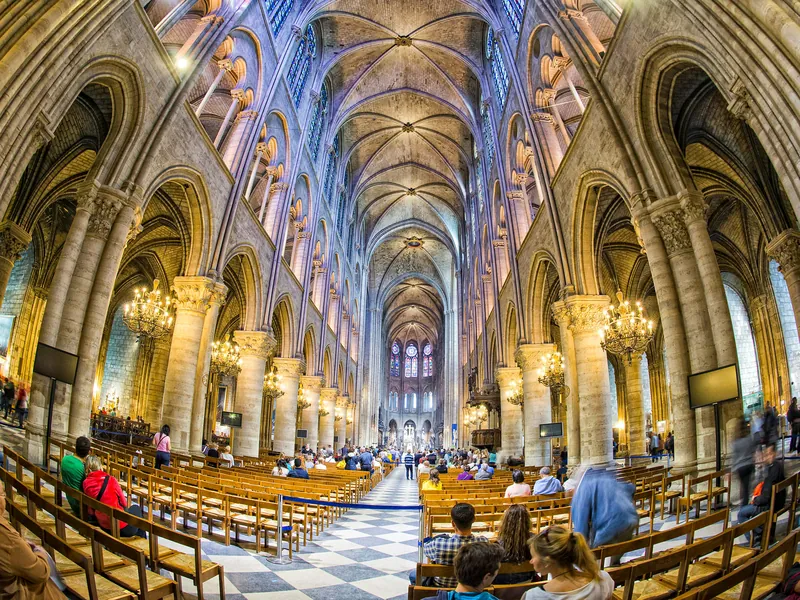
Nearly 8,000 pipes — the organ survived the fire and plays again.
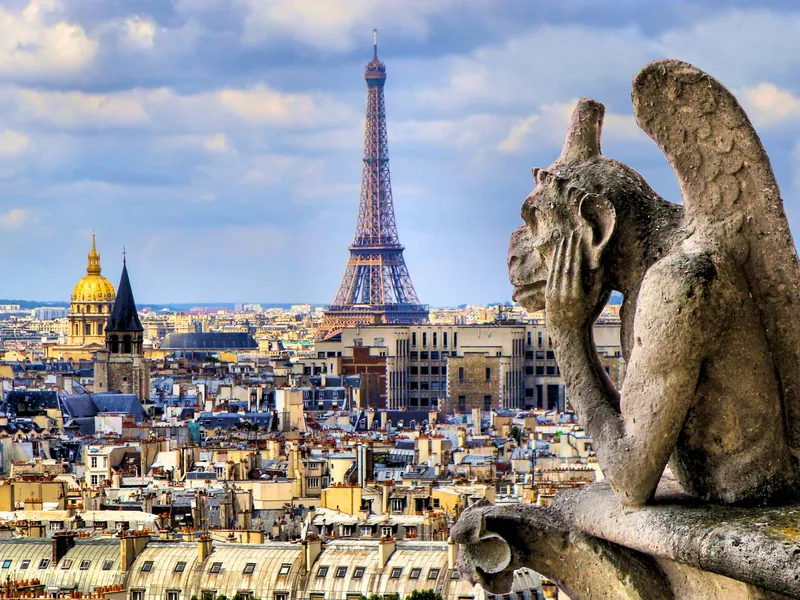
The brooding stone creatures — and why they're only 180 years old.
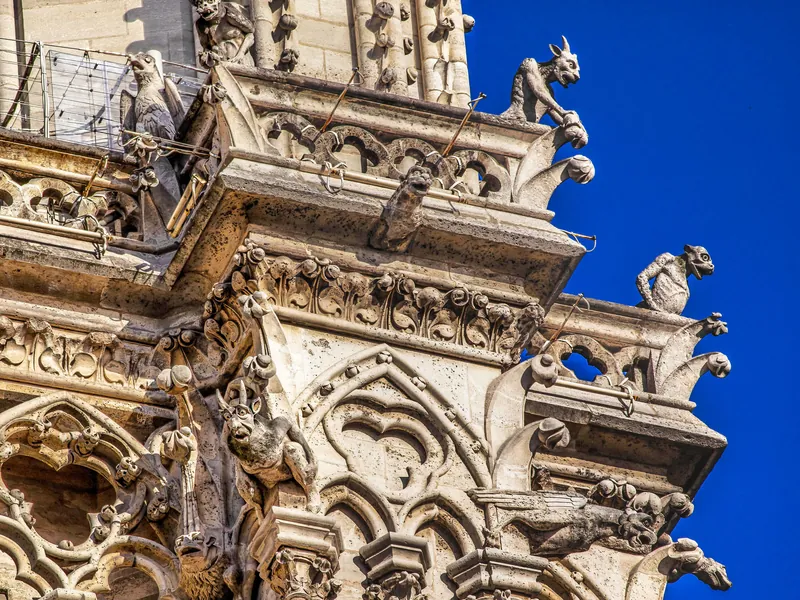
The stone "legs" that let the walls dissolve into glass, and the new spire.
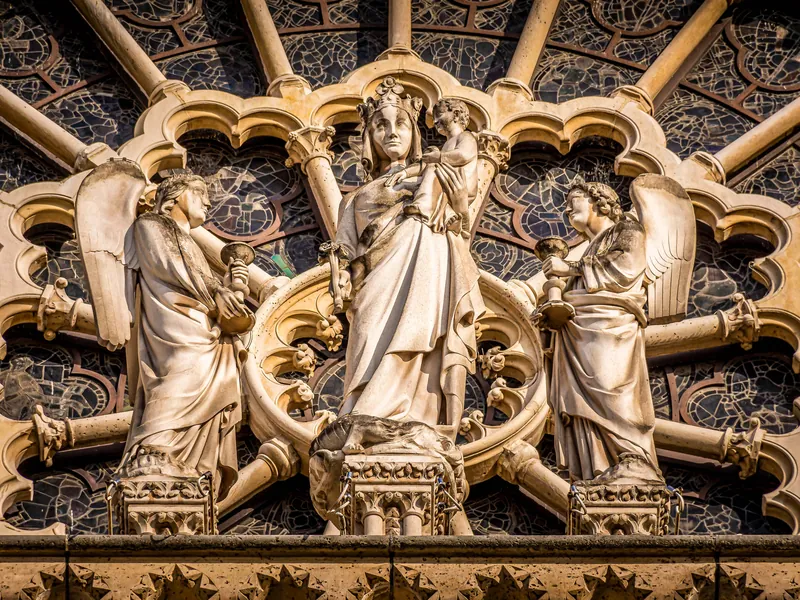
A stone Bible carved for people who couldn't read — the Last Judgment above the door.
Simple to use
One payment, instant access. No subscription.
Get the free TouringBee app on iOS or Android and download the tour.
Open the guide when you arrive, follow the offline map, and start each story yourself at each stop.
Go at your own pace, take breaks, and pick up wherever you left off — for a full year.
Practical info
Entry to the cathedral is free — there is no ticket to buy. A free timed slot on the official site lets you walk in faster at busy hours. The towers, crypt and treasury are separate, paid visits.
There is no entry ticket for the cathedral, and no official "skip-the-line" pass. Entry is free. Booking a free timed slot on the official Notre-Dame website or app simply lets you walk in faster when it's busy.
Optional extras
The cathedral is free and self-guided. If you'd like a guide to walk you around it, or want to add the jewels next door — Sainte-Chapelle, the crypt, a Seine cruise — these are our trusted partners.
Some links below are affiliate links (Tiqets, GetYourGuide, Headout, Booking.com). If you book through them we may earn a small commission — at no extra cost to you. It never affects what we recommend.
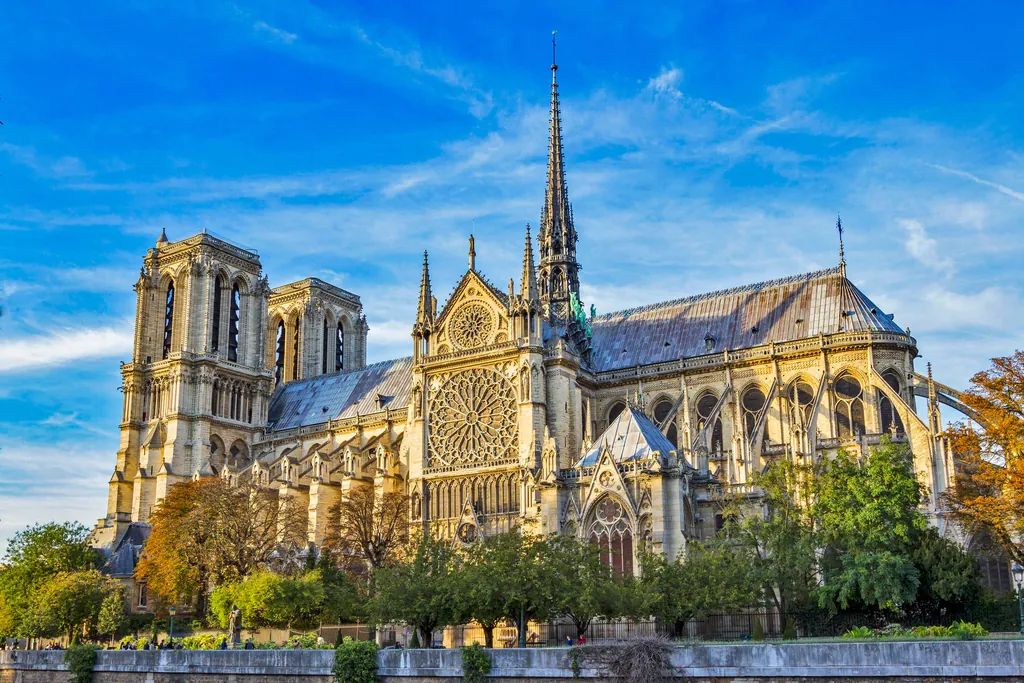

Where to stay
Picture your morning coffee with the towers right there. A handful of hotels on Île de la Cité and along the Left Bank look straight onto the cathedral — and they book out first. See who still has a room with the view.
Find hotels near Notre-Dame →Booked through our partner Booking.com. You pay the same price; we may earn a small commission.
Travelers
Verified reviews from travelers who used the TouringBee Notre-Dame de Paris audio tour.
"I loved the Notre-Dame audio guide. It's clear, dynamic, interactive and very immersive. It explains the history with important details and presents the architecture in a simple way, so you really understand what you're seeing. Highly recommend it."
"Simple, flexible and informative. I liked being able to pause anytime and just enjoy Notre-Dame de Paris. The stories made it far more engaging than walking around without context. Definitely worth it."
"I had an excellent experience — it helps you understand every detail as you walk around, which makes the visit much more special. The narration is easy to follow and genuinely fascinating. A wonderful audio guide."
"The stories are good and fun, not boring like the usual audio guides. Nice that there's information about the exterior too — it helped us pass the time in the queue. We'll do it again."
"This audio guide was amazing — you learn all the historical details and mysteries, and you appreciate the architecture of Notre-Dame from a whole new perspective, at your own pace. I loved it!"
"Extraordinary beauty, history and well-managed crowds, even without a reservation. The restoration dramatically improved its beauty."
Keep exploring Paris
The fire and the rebuild, the beheaded kings, the glass that survived it all — heard exactly where they happened.
Get the Audio Tour — from €9.99