The quiet hours almost everyone sleeps through, the one late evening a week, and the season that sets the rose windows on fire — plus how the free timed reservation rewrites your whole plan.
Almost every morning there's a moment when the doors open and the nave is nearly empty. Arrive for it and the largest Gothic cathedral in France is practically yours. Turn up two hours later and you join the general flow of roughly 30,000 people a day.
The best time to visit Notre-Dame de Paris is no secret. It's a handful of hours almost everyone sleeps through, one evening a week, and knowing which season sets the windows on fire. Since the cathedral reopened on December 8, 2024, five years after the fire, the crowd is fully back — so timing matters more than anything else.
And even if the queue does catch you, the time needn't be wasted. The TouringBee audio guide starts outside Notre-Dame: several stops cover the facade, the square and the Île de la Cité, so you can begin the walk while you wait for the door and pick it up again inside.
Below: the quiet windows, the light, the mass schedule, and how a free timed reservation rewrites the whole plan.
The best time to visit Notre-Dame is the first ninety minutes after opening, roughly 7:50 to 9:30am on a weekday. The doors open, the security check is short, and inside there's still the silence the building was made for. You can literally hear your own footsteps on the stone.
By ten, the tour groups arrive, and from then until about four in the afternoon the nave is dense — sometimes shoulder to shoulder.
There's an even better window, and almost nobody uses it. On Thursdays the cathedral stays open until 10:00pm — the one late evening of the week. Come after seven and you get one of the calmest windows of the week: the day-trippers are back at their hotels, the light has softened, and the interior takes on that dim, almost otherworldly quality the medieval builders were chasing all along.
The contrast between the street and the cathedral was the whole point. Picture a medieval townsperson stepping in from cramped, dark city lanes — and suddenly standing in a space where the walls seem to dissolve, the vaults climb away, and colored light spills across the floor. At eight in the morning or nine at night, that transition hits far harder than at noon in a crowd.
Skip the 10:00am–4:00pm block if you can. If your schedule locks you into midday, book a slot ahead and arrive right at the start of your window.
Weekdays beat weekends, and by a wide margin. Saturday and Sunday draw tourists and Parisians alike, and Sunday adds masses — busier and longer, during which part of the cathedral is closed to sightseeing.
Tuesday, Wednesday and Thursday are your days. Thursday stands out because of the late evening: no other day gives you that calm 7:00–10:00pm window.
Monday is a touch quieter than the weekend, but note that some neighboring sights are closed on Mondays — the Archaeological Crypt, for one. So if you're building a whole day on the Île de la Cité, midweek works out simplest.
One practical detail: the morning quiet holds better midweek than on Friday, when the weekend influx has already begun.
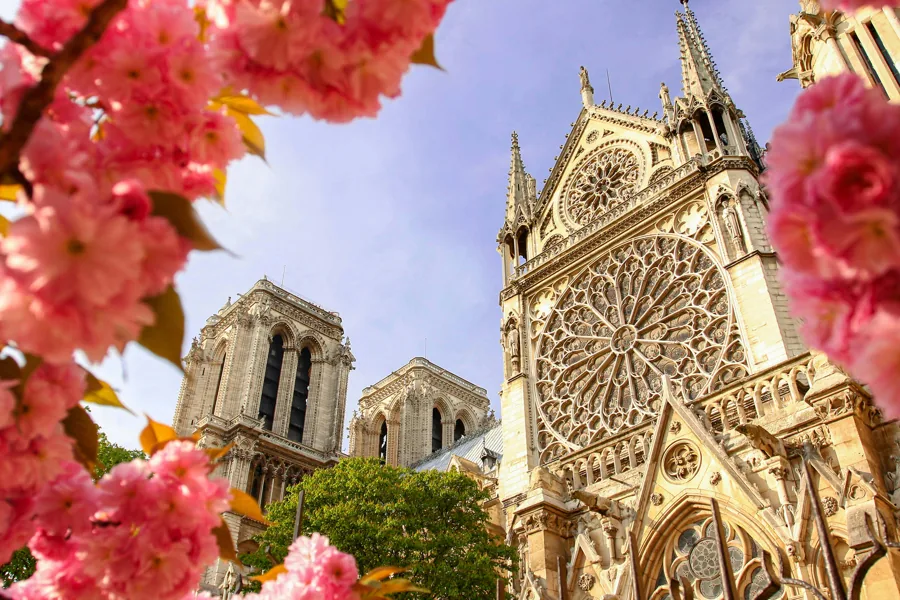
Spring (April–May) and early autumn (September–October) are the sweet spot: mild weather, a long enough day, and crowds you can manage if you play it smart. These are the months when the free reservation matters most, because the queues here peak.
Summer (June–August) brings the heaviest crowds of the year, and the walk-in queue at midday easily tops an hour. But summer has one real advantage no other season offers: the Notre-Dame towers stay open late. From April 1 to September 30 they're open 9:00am–11:00pm; from October 1 to March 31 they close at 5:30pm. So if the 424 steps for the chimeras on the gallery and the famous view from the top are on your list, a long summer evening is made for it. Booking is mandatory at tours-notre-dame-de-paris.fr; there are no on-site sales at all.
Winter (November–February) is the quiet season, and quiet in the best way. The crowds thin and low sun rakes across the facade; on a frosty morning you can even catch icicles on the carved gargoyles. The trade-off is a short day and the towers closing early.
For most people who want both good light and space around them, the best choice is a weekday morning in spring or autumn.
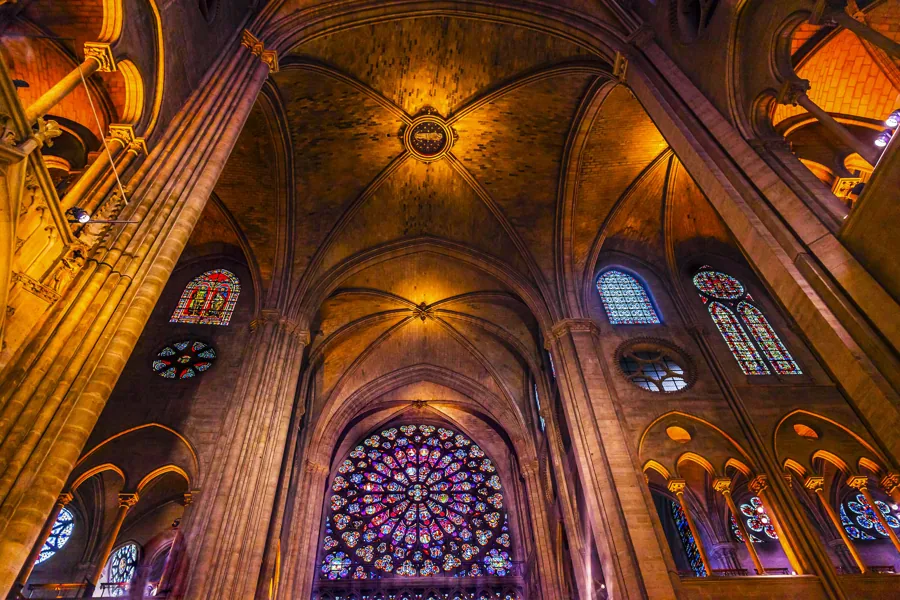
Notre-Dame has three great rose windows, and they don't light up at the same time. Timing your visit to the light is the difference between "nice stained glass" and a memory you keep for life.
The west rose — the one over the main entrance — faces west, so it catches the late-day and early-evening sun. Come at the end of the day and it burns above the great organ.
The south rose in the transept is the warmest for light. When the sun swings south, it throws warm tones across the floor and walls — from late morning into the early afternoon, ironically the busiest hours. It's worth a slightly fuller nave for.
The north rose stays turned away from direct sun for most of the year and catches light best early on a bright summer morning, when the north transept fills with soft blues and greens.
At the security check you may be asked to take your headphones off for a moment. It doesn't interrupt the audio walk: slip them off while you go through the control, then put them back on after you're inside and keep listening. The one rule that always applies — keep the volume low enough not to disturb services or other visitors.
The TouringBee audio guide can be started before you even reach the door of Notre-Dame. The first points are outside: while the queue inches forward, you're already hearing the stories of the facade and the Île de la Cité. After the security check you carry on inside — and if you're asked to remove your headphones at the entrance, just put them back on once you're through.
From there, 31 stops answer the questions most people walk straight past: what hides in the details of the facade, and why the medieval rose windows look completely different at different times of day.
31 stops · ~2 hours · 10 languages · 100% offline · from €6.99 · one year of access.
€9.99 €6.99 — an exclusive discount for readers of this site. It's applied automatically at checkout: no code, nothing to enter. One payment, a full year of access in your language.
Download link sent to your email right after purchase · the guide works for 1 year · questions? support@touringbee.com
Buy the Audio Guide — €6.99Notre-Dame audio guide: route, stops & what's inside →Notre-Dame is a working cathedral, not a museum, and that shapes when you can move through it freely. Masses are held daily; on Sundays and major feasts they're busier and longer. During a service the choir and central section are given over to worshippers, and sightseeing in those zones pauses. You can always stay inside quietly and respectfully, but you won't be able to walk behind the altar at that time.
If your goal is to walk the whole cathedral at your own pace, aim for the gaps between services: early morning and Thursday evening usually fall outside the busiest liturgical hours. Check the day's mass schedule on the official site before you set out.
One thing, though, is worth timing toward rather than around. The Crown of Thorns is now brought out every Friday from 3:00 to 6:30pm, with an adoration on the first Friday of the month from 3:00 to 5:00pm. If seeing it matters to you, build the trip around a Friday. The rest of the time it's kept in the Treasury (€12, tickets on-site only).
Here's the rule that quietly rewrites everything above: entry is free, but the flow is now managed by a free timed reservation. Book it at resa.notredamedeparis.fr or the official Notre-Dame app, usually two to three days before your visit. You can still walk in without one — but in high season the queue for walk-ins can get very long, especially in the middle of the day.
And if you couldn't get a slot and end up in the general queue, start the audio guide outside. Some of the stops are on the square and the Île de la Cité, so the wait turns into the start of the walk rather than a lost hour.
So the smart move is to book the earliest slot of the day you can get. With an early booked slot the wait is usually much shorter, and you're inside before the main daytime flow. A booked Thursday evening locks in that late calm. From April to October, don't gamble — book. Off-season and midweek, walking in is far easier.
And ignore anyone on the square selling "Notre-Dame tickets" or waving a petition clipboard. Entry to the cathedral is free. You only pay for the towers, the crypt and the Treasury.
Small-group and private Notre-Dame and Île de la Cité tours — booked ahead, with a guide instead of guesswork.
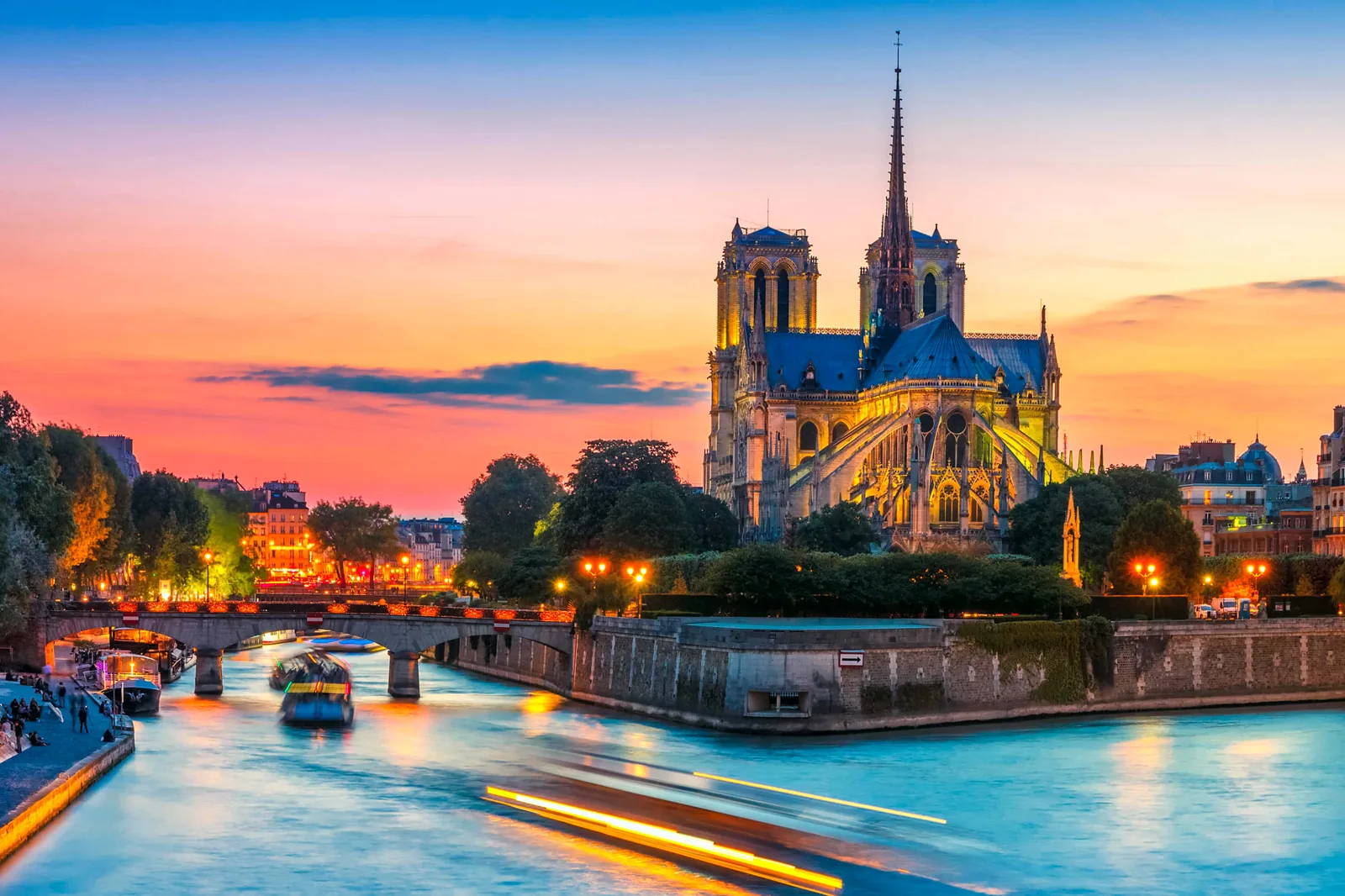
For the shot everyone wants — the buttresses and spire reflected in water — head to the south side, along the Seine. It's the facade that most often makes it into films, and for good reason: stone carving sunk in greenery, the apse and buttresses fanning out like ribs. Late afternoon and the golden hour light this side best.
The classic front shot, with the two towers and the west rose, is also best at the end of the day, when the facade catches warm light. And for a postcard sunset, cross to a bridge: Pont de la Tournelle or Pont Saint-Louis, and shoot toward the apse as the sky changes color.
Stay a short walk from the island and you can shoot the golden hour and still be first through the door the next morning.
What time of day is best to visit Notre-Dame de Paris?
The first ninety minutes after opening — roughly 7:50 to 9:30am on a weekday. It's quietest and the light is calm. One of the calmest windows of the week is Thursday evening, when the cathedral stays open until 10:00pm. The 10:00am–4:00pm block is the busiest.
What are Notre-Dame's opening hours?
Monday, Tuesday, Wednesday and Friday 7:50am–7:00pm, Thursday 7:50am–10:00pm, weekends 8:15am–7:30pm. Last entry 30 minutes before closing. The schedule shifts for services, so check the official site notredamedeparis.fr before you go.
When is Notre-Dame least crowded?
Early weekday mornings and Thursday evening — in spring, autumn or winter. The busiest time of the year is midday in summer, when the walk-in queue usually tops an hour.
Do I need to book a visit to Notre-Dame?
Entry is free and no ticket is required, but we strongly recommend the free timed reservation (usually available two to three days ahead), especially April–October: with it the wait is usually much shorter. The earliest slot is the best way to catch the silence.
Which season is best for visiting Notre-Dame?
Spring and early autumn give the best balance: good light, comfortable weather and a manageable crowd. Summer is crowded but the towers stay open until 11:00pm from April to September. Winter is quietest, with calm low light, but the day is short and the towers close at 5:30pm.
When do the stained-glass windows look best?
The west rose glows at the end of the day, as the sun moves west. The south rose gives the warmest tones from late morning into the early afternoon. The north rose is best caught early on a bright summer morning.
Can I use an audio guide inside Notre-Dame?
Yes. TouringBee runs on your phone and needs no internet once downloaded. You can start it outside the cathedral. If you're asked to remove your headphones at the security check, take them off for the control and keep listening once you're inside. Indoors, keep quiet and don't use a speaker.
Pick your quiet hour, book the free timed slot, and let the cathedral fill with light while it's still empty. After that, all that's left is knowing what you're looking at — and that's what the audio guide is for: 31 stops, ~2 hours, 10 languages, fully offline, one year of access.
Start the audio guide — from €6.99Some links are partner links (Booking.com, Tiqets, GetYourGuide). The price is the same for you; we may earn a small commission.
