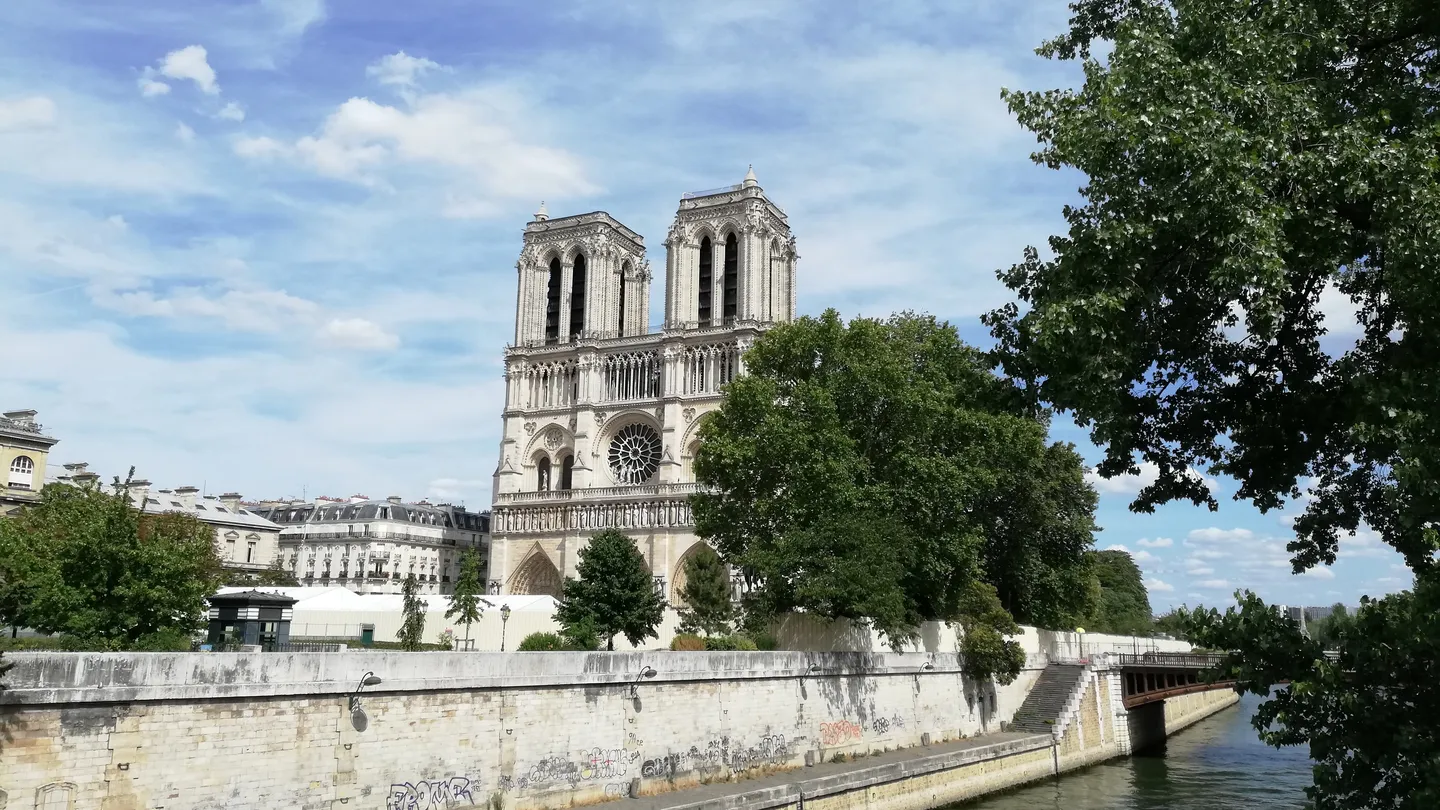
The square, bridges, quays, a free terrace with a view from above, the towers and the interior — what you'll get in the frame, when the light is best and what's changed with the works around the cathedral.
Almost everyone photographs Notre-Dame from the same spot — head-on from the square, along with the crowd. The result is recognisable, but it looks like everyone else's. Yet the cathedral stands on an island, and you can shoot it from a dozen bridges and quays: reflected in the Seine, through the branches of the oldest tree in Paris, from the "ship's stern" with the spire, or from above, from a free terrace across the river.
We've picked 10 spots that still work today, after the restoration. For each one you'll find what ends up in the frame and when the light is best. One tip that can save you half a day: the cathedral's façade faces west, while the apse faces east. So the façade is lit in the afternoon, and the "stern" with the spire in the morning.
Many of these spots are stops on the TouringBee audio guide: while you're working out your angle, you can listen to what exactly you're looking at. Of its 31 stops, 13 are outside.
| Spot | What's in the frame | When |
|---|---|---|
| The square (parvis) | The whole façade | Early morning without the crowds; afternoon for light on the façade |
| Petit-Pont and Quai de Montebello | Façade and south side above the Seine | Afternoon and sunset |
| Square René-Viviani | The cathedral through the branches of the oldest tree | Daytime |
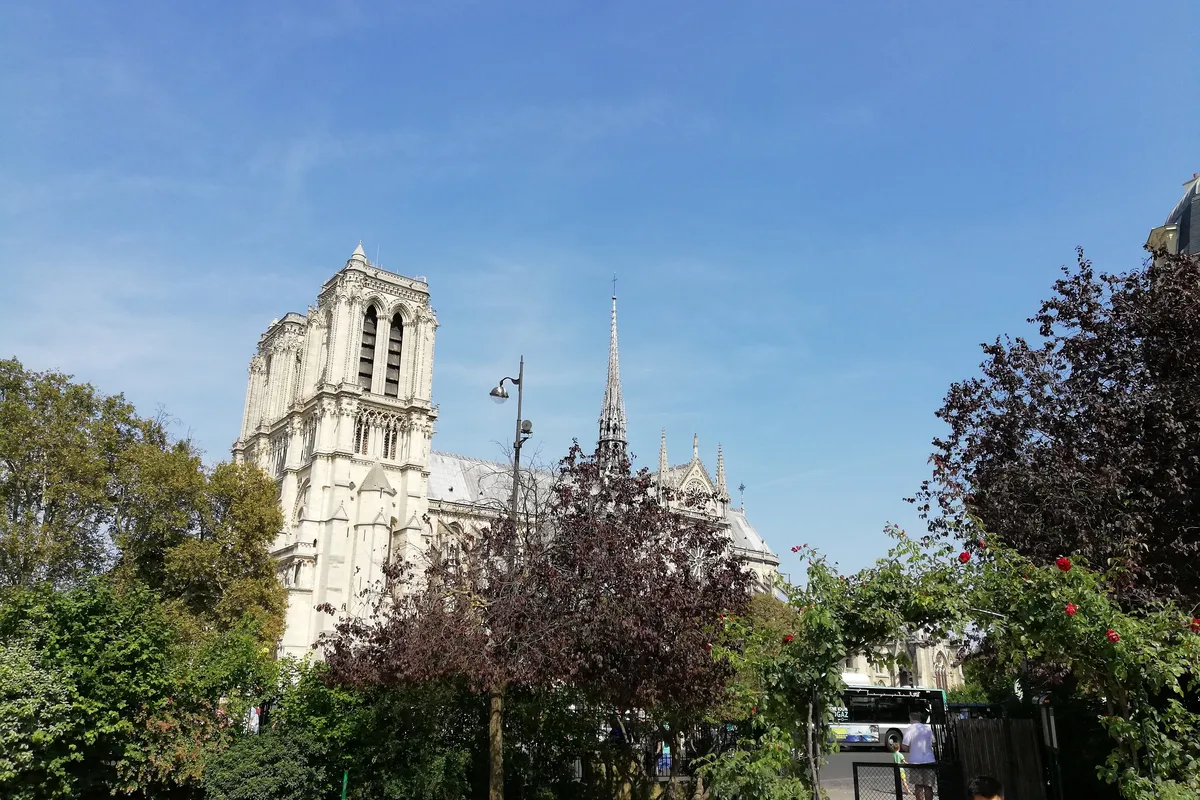
| Pont de l'Archevêché | Flying buttresses and the south transept façade | Around midday |
| Pont and Quai de la Tournelle | Apse and spire — the "ship's stern" | Morning; silhouette at sunset |
| Île Saint-Louis | The apse from the nearby bank | Morning and blue hour |
| Institut du monde arabe terrace | The cathedral from above, the Seine, Île Saint-Louis | Late afternoon |
| North side | The Virgin of the north portal and the Porte Rouge | Any time, soft light |
| The cathedral's towers | Chimeras and all of Paris | Summer evenings (ticket required) |
| Inside | Rose windows, nave, choir | Soon after opening |
The classic shot starts here, on the parvis. The most common mistake is getting too close: the 69-metre façade only fits into the frame from the far edge of the square or with a wide-angle lens. Step back to the edge of the square opposite the central portal, and the towers will stop "falling" backwards.
The façade faces west, so it's in shadow in the morning and glows with warm light in the afternoon and at sunset. Crowds are thinnest early in the morning: by opening time, a queue is already forming at the entrance. Before you leave, look for the bronze star of Point Zéro set into the paving — a favourite close-up subject.
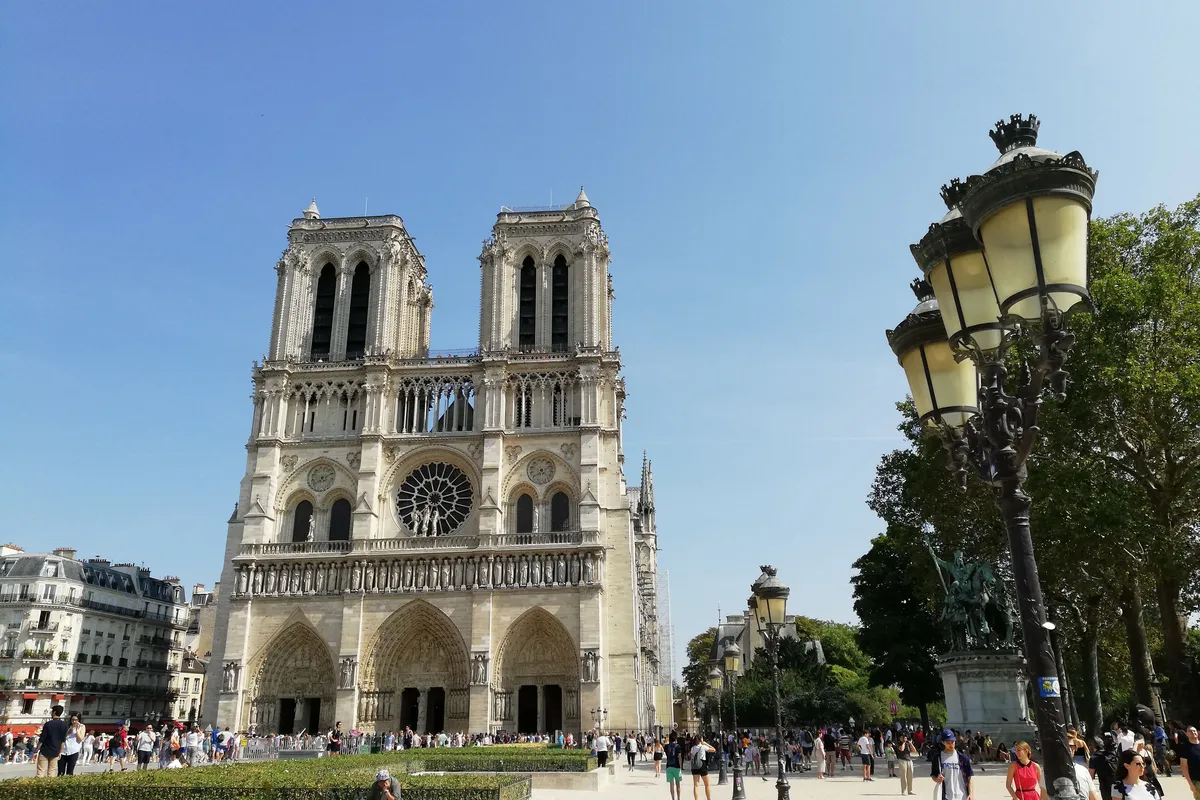
Important: the square is due to be redeveloped, with work scheduled from roughly summer 2027 to the end of 2028. If you're planning a trip during that period, part of the square may be fenced off.
Cross the Petit-Pont to the Left Bank and turn around. From here you see the cathedral at an angle, façade and south side together, with the Seine running along the bottom of the frame. It's arguably the most postcard-perfect view in Paris. A little further along the Quai de Montebello stand the green boxes of the bouquinistes, the riverside booksellers — they make a ready-made foreground.
The best light comes in the afternoon and at sunset, when the sun shines on the façade from the west. If you go down to the water's edge, onto the lower quay, you can catch passing boats and the reflection of the towers.
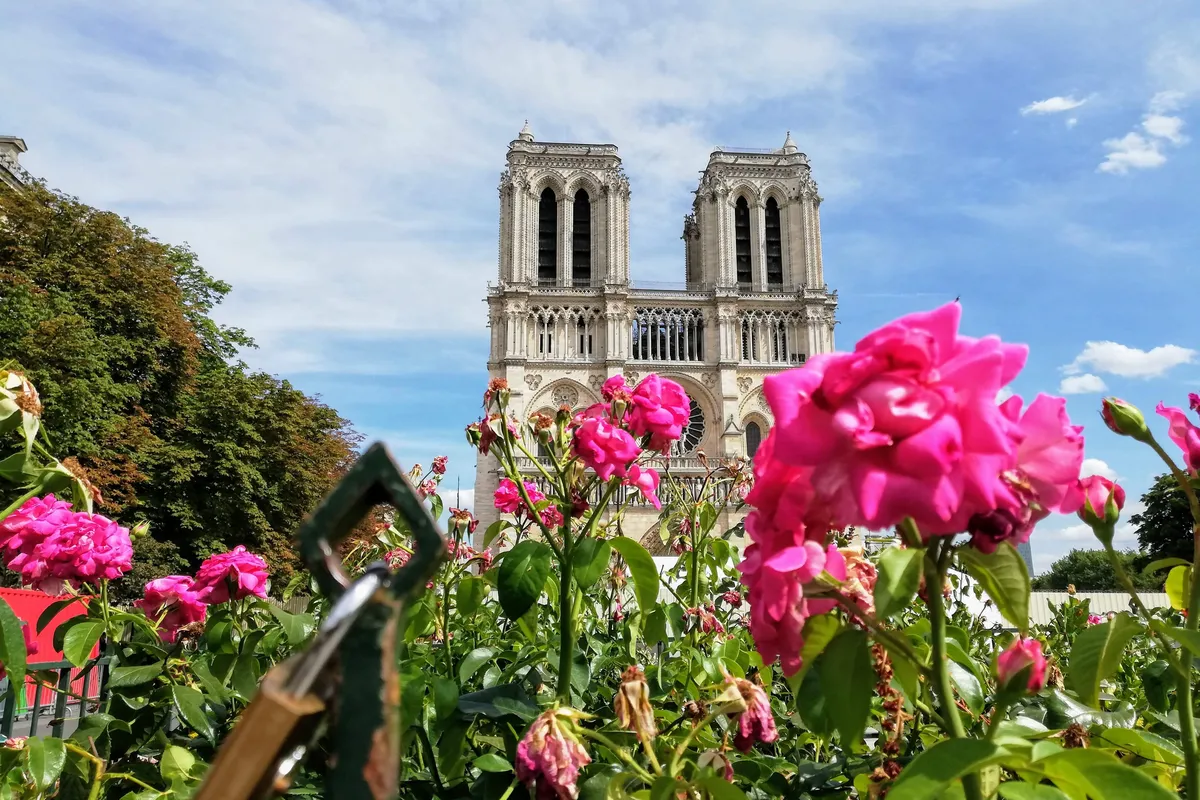
Just off the quay, next to the Shakespeare and Company bookshop, is the little Square René-Viviani. It's home to a black locust (robinia) considered the oldest tree in Paris: according to tradition, it was planted around 1601. Its trunk has long been propped up by concrete supports, but the tree still comes into leaf.
From the square you see Notre-Dame through leaves and branches, and it's one of the few shots where the cathedral looks homely rather than grand. Come during the day: there are benches, and it's noticeably quieter than on the quay.
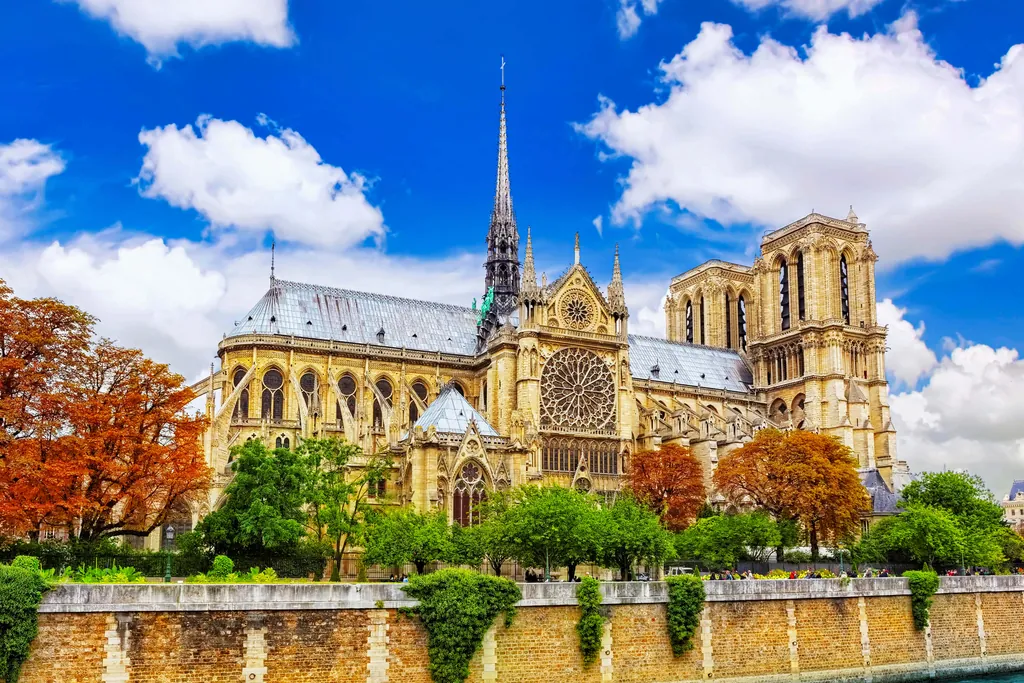
The Pont de l'Archevêché is the best place to see how a Gothic cathedral works: the stone "arms" of the flying buttresses that hold up the vaults, and the huge south rose window of the transept. Around midday the sun is in the south and lights up exactly this side.
Bear in mind that landscaping work is under way around the cathedral. There's work going on along the Quai de l'Archevêché, and the Square de l'Île-de-France at the eastern tip of the island is closed; the plan is to reopen it in summer 2027. You can see the cathedral from the bridge, but fencing may end up in your shot.
Download link sent to your email right after purchase · the guide works for 1 year · questions? support@touringbee.com
Get the Audio Guide — €6.99Notre-Dame audio guide: route, stops & what's inside →Seen from the east, Notre-Dame looks like a huge ship sailing down the Seine: the apse is its stern, the flying buttresses are its oars and the spire is its mast. This view opens up best from the Pont de la Tournelle and the Quai de la Tournelle on the Left Bank. On the bridge stands a tall statue of Saint Geneviève, patron saint of Paris, by Paul Landowski. She's easy to include in the frame along with the cathedral.
The apse faces east, so it catches the sun in the morning. At sunset, though, the cathedral is backlit, which gives you a striking silhouette with the spire against the sky.
Cross the Pont Saint-Louis to the neighbouring island and turn right onto the Quai d'Orléans. From here the apse and spire are very close, just across a narrow channel of the river. Street musicians often play on the bridge itself, and in the evening people gather here to watch the sunset.
It's a good spot for the blue hour — the short spell after sunset when the sky is still blue and the cathedral's floodlights are already on. You can set up a tripod on the quay, but keep it out of the way of passers-by.
Few people know you can photograph Notre-Dame from above without climbing the towers. On the ninth floor of the Institut du monde arabe, on the Left Bank, there's an open-air terrace overlooking the Seine, Île Saint-Louis and the cathedral's apse. A lift takes you up, and access to the terrace is usually free.
The terrace is open during the institute's opening hours, so check the schedule on its website before you go. The best light comes towards evening.
Tourists barely notice the cathedral's north side, and they're missing out. From the Rue du Cloître-Notre-Dame, which was redone in 2026, you can see the north transept portal with its graceful statue of the Virgin, and the little Porte Rouge (Red Door). In the Middle Ages, the canons used it to go from their quarter into the cathedral.
The sun hardly reaches this side, so the light is soft at any time of day — ideal for sculptural details. Square Jean-XXIII, behind the apse, borders the cathedral's construction site, and its own renovation is planned for 2029–2030. If it's open on the day you visit, take a look in there too: from there you can see the flying buttresses up close.
Notre-Dame's most famous shot — a chimera gazing pensively out over Paris — is taken from the gallery between the towers. For that you need a ticket for the climb (from €16), and it's worth booking ahead. In summer the towers are open until 11pm, and an evening slot gives you soft light and the city lit up.
Tripods, selfie sticks and large bags aren't allowed up top, and the passages are narrow, so it's best to bring a single camera or just your phone. Everything you need to know about the climb is in our guide to Notre-Dame's towers.
Since the restoration, the stone inside has become pale, almost white, and the interior is far easier to photograph than before the fire. The most striking shots are the north and south transept roses and the view down the nave towards the choir. From inside, the west rose is partly hidden by the great organ.
The rules are simple but strict. You may take photos for personal use, without flash, tripod, selfie stick or gimbal. As soon as a service begins, you have to stop shooting; you may not photograph the faces of worshippers and priests without permission, nor the chapels set aside for prayer. Crowds are thinnest soon after opening. For ideas on what's really worth shooting inside, see our article on what to see inside Notre-Dame.
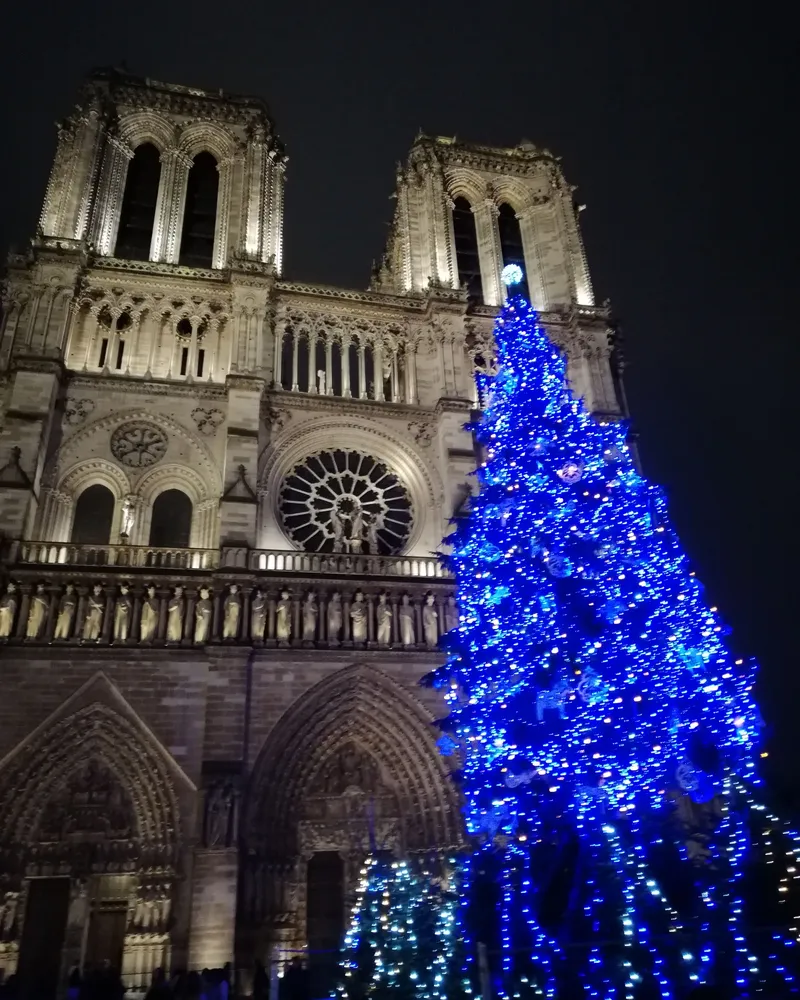
After sunset the façade and towers are floodlit, and the cathedral becomes photogenic all over again — especially from the Pont de la Tournelle and the Quai de Montebello. The Seine itself offers another angle: sightseeing boats and the Batobus river shuttle pass right by the cathedral, and from the water you look up at it, bridges and all.
And finally, a word on drones: flying over central Paris without special authorisation is prohibited, so leave yours at home.
Small-group and private Notre-Dame tours — a good option if you'd rather ask questions as you go.
Where is the best place to photograph Notre-Dame?
For the façade: from the far edge of the square and from the Left Bank by the Petit-Pont. For the "ship" view with the spire: from the Pont and Quai de la Tournelle. From above: from the cathedral's towers or the free terrace of the Institut du monde arabe.
What time of day is best for photos?
The façade faces west and is lit in the afternoon and at sunset. The apse faces east and is lit in the morning. The square is least crowded early in the morning.
Can you take photos inside Notre-Dame?
Yes, for personal use and without flash. Tripods, selfie sticks and gimbals are prohibited, and you have to stop shooting during services.
Can you fly a drone over Notre-Dame?
No: flying over central Paris without special authorisation is prohibited.
Is the garden behind the cathedral open?
Landscaping work around the cathedral is continuing until 2030. The Square de l'Île-de-France at the tip of the island is closed until roughly summer 2027. Square Jean-XXIII borders the construction site, so it's best to check on the spot whether it's open on the day of your visit.
Do the audio guide's outdoor stops and you'll know what you're photographing: who stands in the Gallery of Kings, what the portals depict and where the "stern" of the medieval cathedral was.
Get the audio guide — €6.99The GetYourGuide tour link is a partner link: the price is the same for you, and we may earn a small commission. The audio guide is provided by TouringBee.
